
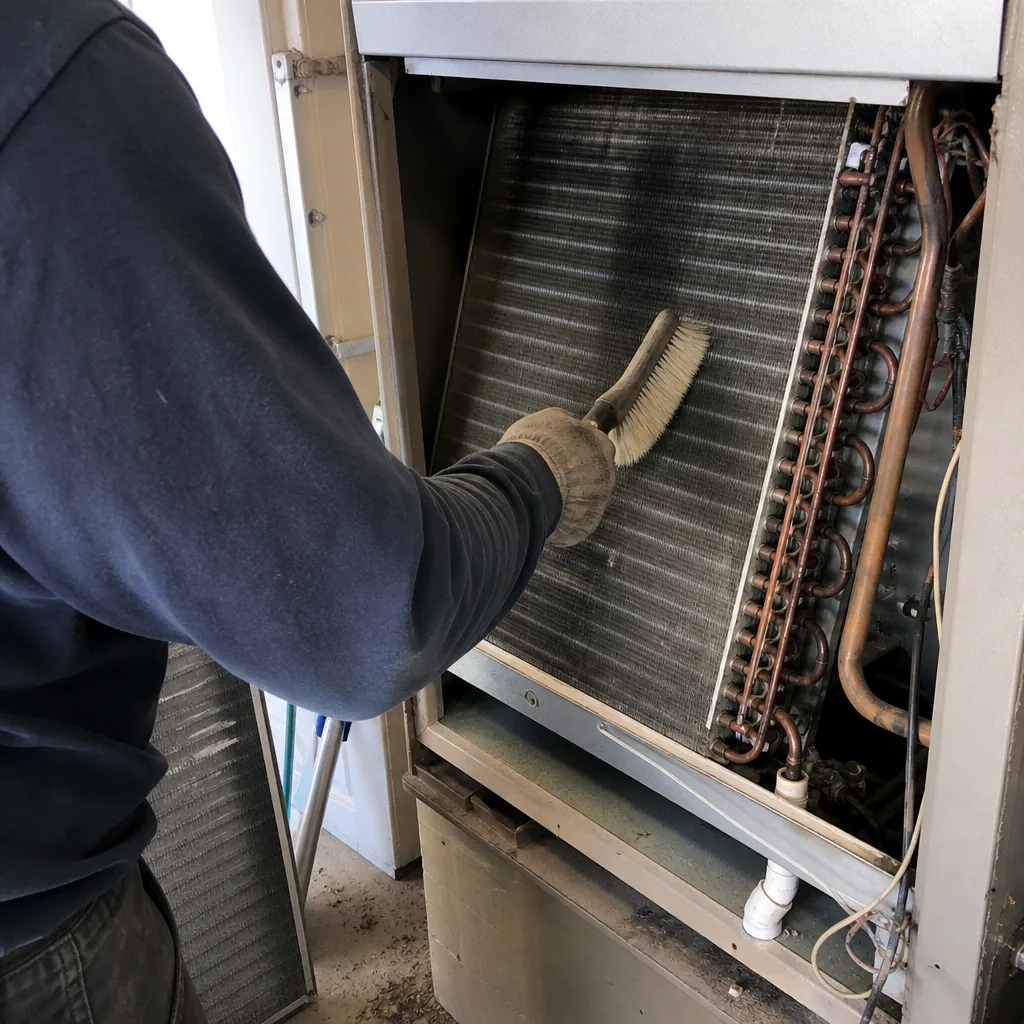
Last updated November 23, 2026
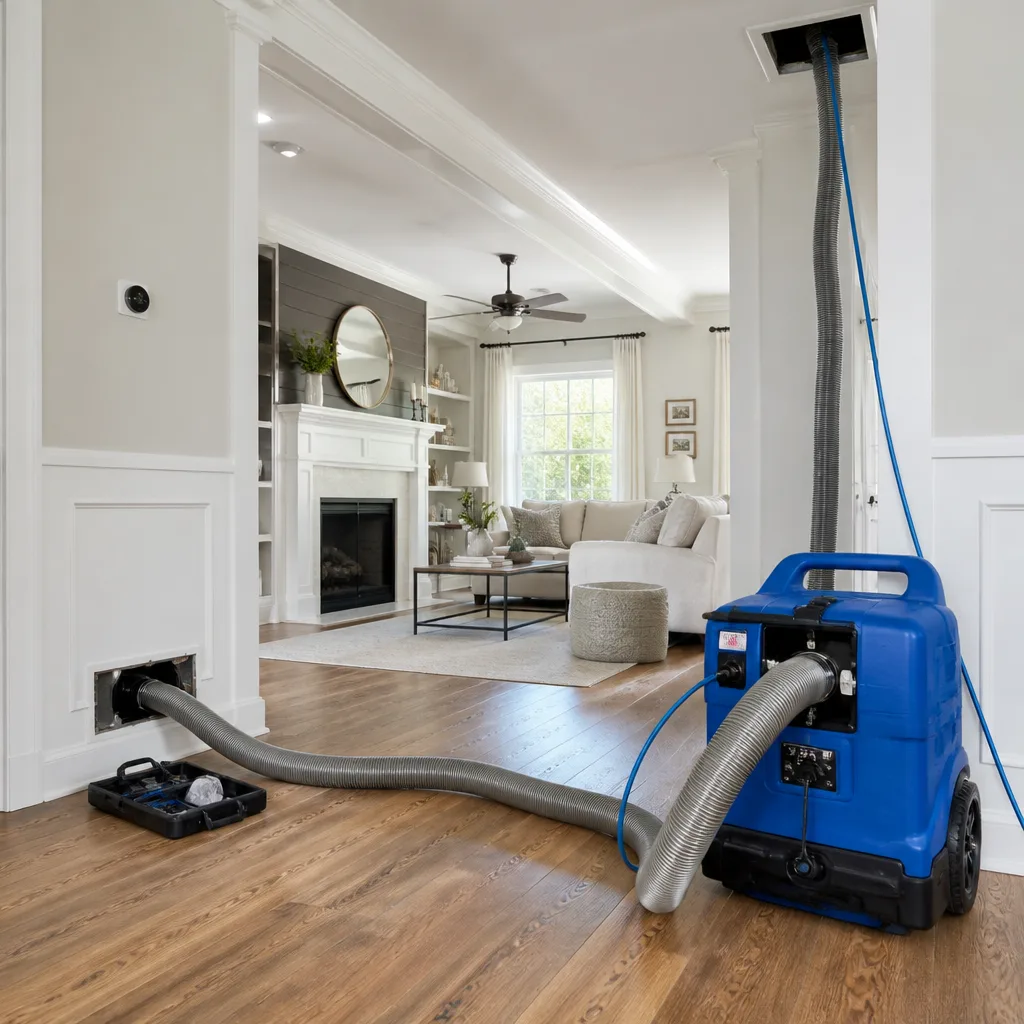 Whole-home duct cleaning
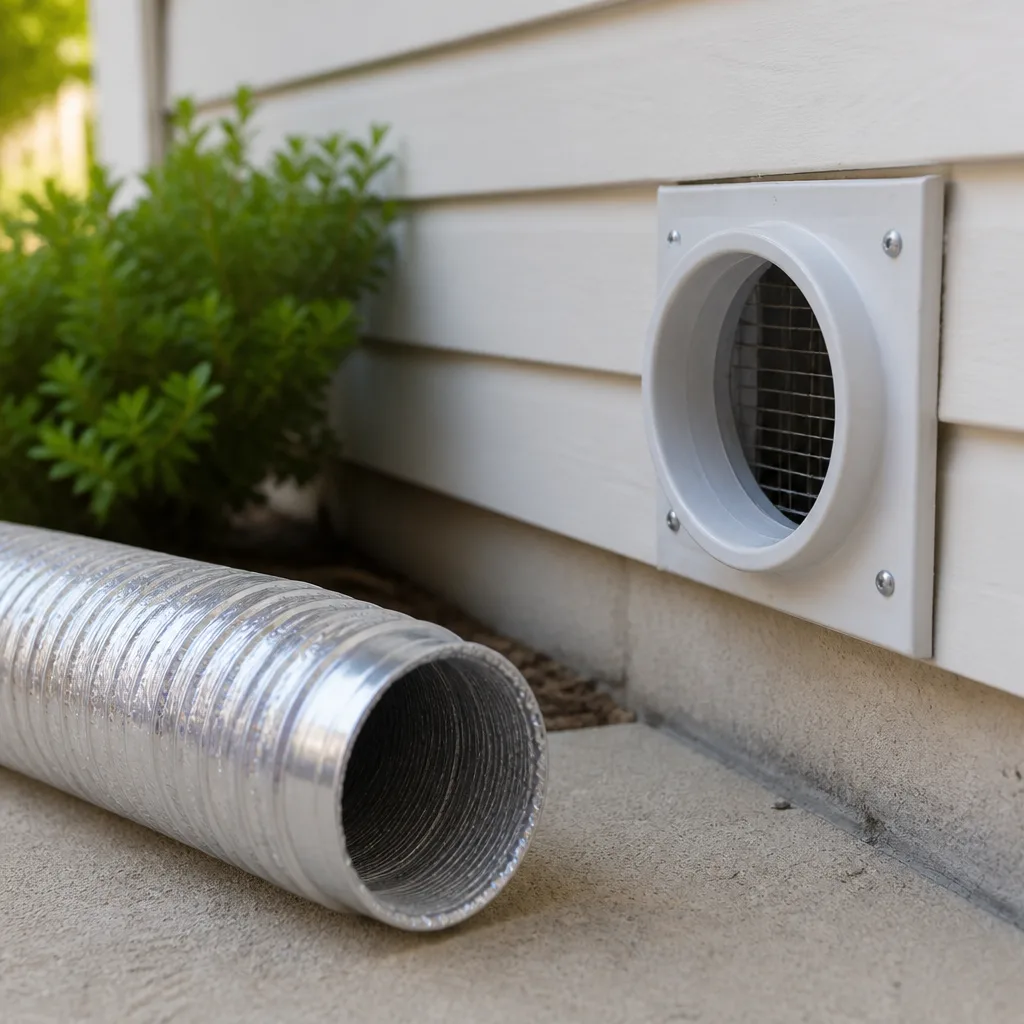 Dryer vent cleaning
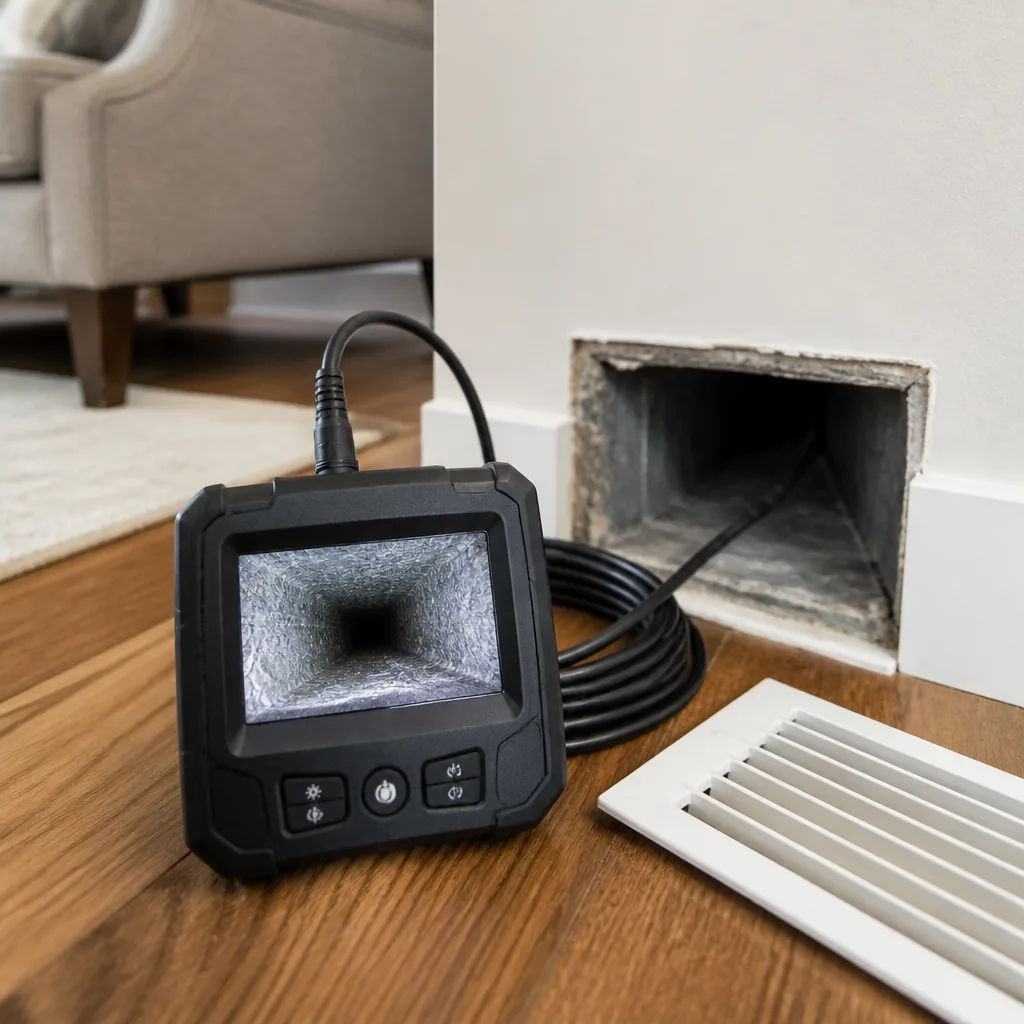 Camera inspection
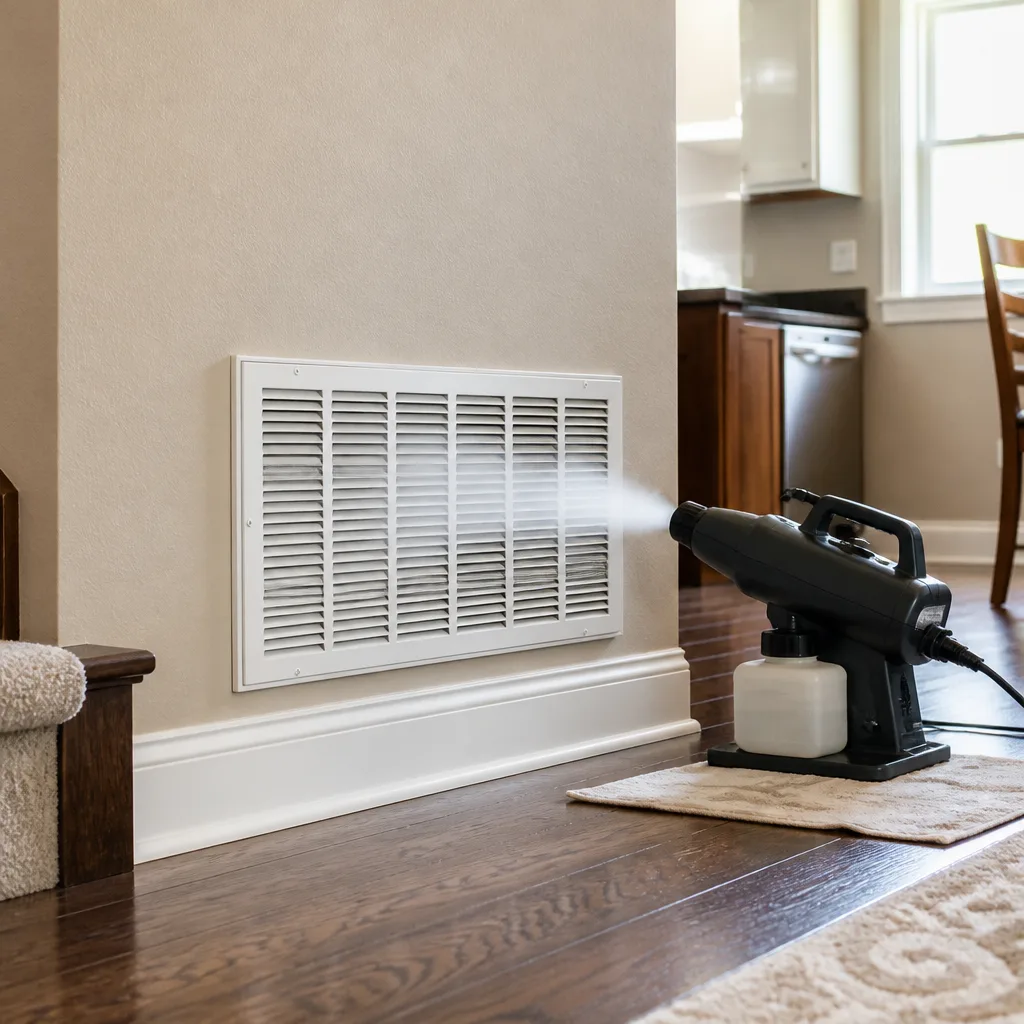 Sanitizing & deodorizing
Whole-system duct and dryer vent check with before-and-after photos - you see exactly what came out of your vents
That "$99 whole-house special" is a bait ad - the real number appears once they are in your hallway, or the "clean" is a shop-vac at the register. We photograph the inside of your ducts before and after instead.
Seasonal Air Duct Cleaning Care for Park Hill: Year-Round Homeowner’s Guide
Most homeowners treat duct cleaning as a calendar chore. Three to five years pass, the truck shows up, and the system gets serviced on schedule. That schedule ignores what the air in Park Hill actually does. A single heavy wildfire smoke week in August can push more fine particulate into a duct system than two years of ordinary household use, and a March pollen surge loads return-side ductwork in ways a winter cleaning never touches. The calendar says your ducts are fine. The seasons say otherwise. This guide walks through each of Park Hill’s four distinct air-quality seasons, what each one deposits in your ductwork, and how to decide whether this year’s conditions justify moving up a cleaning instead of waiting for the interval.
Quick Answer
Air ducts in Park Hill need cleaning on a condition-driven schedule, not just a calendar one, because spring pollen, summer wildfire smoke, fall furnace startup, and winter dry-air static each load the system differently. The practical rule: keep a base cleaning interval, then move it up by one season whenever a major smoke event, a renovation, a new pet, or visible dust at the registers signals a load your routine interval didn’t account for. Inspect registers after every peak season and decide from what you see, not what the calendar says.
Styles & brands we work with
- Whole-home duct cleaning
- Dryer vent cleaning
- Camera inspection
- Sanitizing & deodorizing
Table of Contents
- Why Park Hill Ducts Load Differently Than a Calendar Suggests
- Spring (March – May): Cottonwood, Grass Pollen, and Filter Bypass
- Summer (June – September): Wildfire Smoke and the PM2.5 Protocol
- Fall (October – November): Furnace Startup and the First-Heat Smell
- Winter (December – February): Dry Air, Static, and Humidifier Pans
- How to Decide if This Year Justifies Moving Up Your Cleaning
- The Four-Season Inspection Checklist
- Frequently Asked Questions
Why Park Hill Ducts Load Differently Than a Calendar Suggests
Park Hill sits at an elevation and in a geographic position where the outdoor air changes character four times a year in ways that most of the metro doesn’t see quite the same. Spring brings a concentrated cottonwood and grass pollen surge across the older tree canopy in this neighborhood. Summer puts wildfire smoke overhead on days when the wind shifts off the mountains and foothills. Fall marks furnace startup, when the heating system pushes a season’s worth of settled dust through the house for the first time. Winter drops indoor humidity low enough that static electricity starts suspending dust in the airstream instead of letting it settle.
Each of those is a loading event. Each one deposits something different in your ductwork: fine pollen, smoke particulate, combustion dust from the furnace, or a static-charged dust film that clings to duct walls rather than settling in the return plenum. A duct system that gets one cleaning every four years never accounts for the fact that some years are simply heavier than others.
The other piece most homeowners miss is that ductwork in Park Hill’s older housing stock is often original to the home. Those systems were sized and sealed to a standard from decades ago, and small gaps at joints, at the plenum connection, and around the register boots are common. When those gaps exist, a heavy pollen or smoke season doesn’t just load the ducts – it pulls unfiltered outdoor air into the system at every gap, bypassing the filter entirely. That’s why seasonal care in Park Hill is as much about sealing leaks as it is about cleaning.
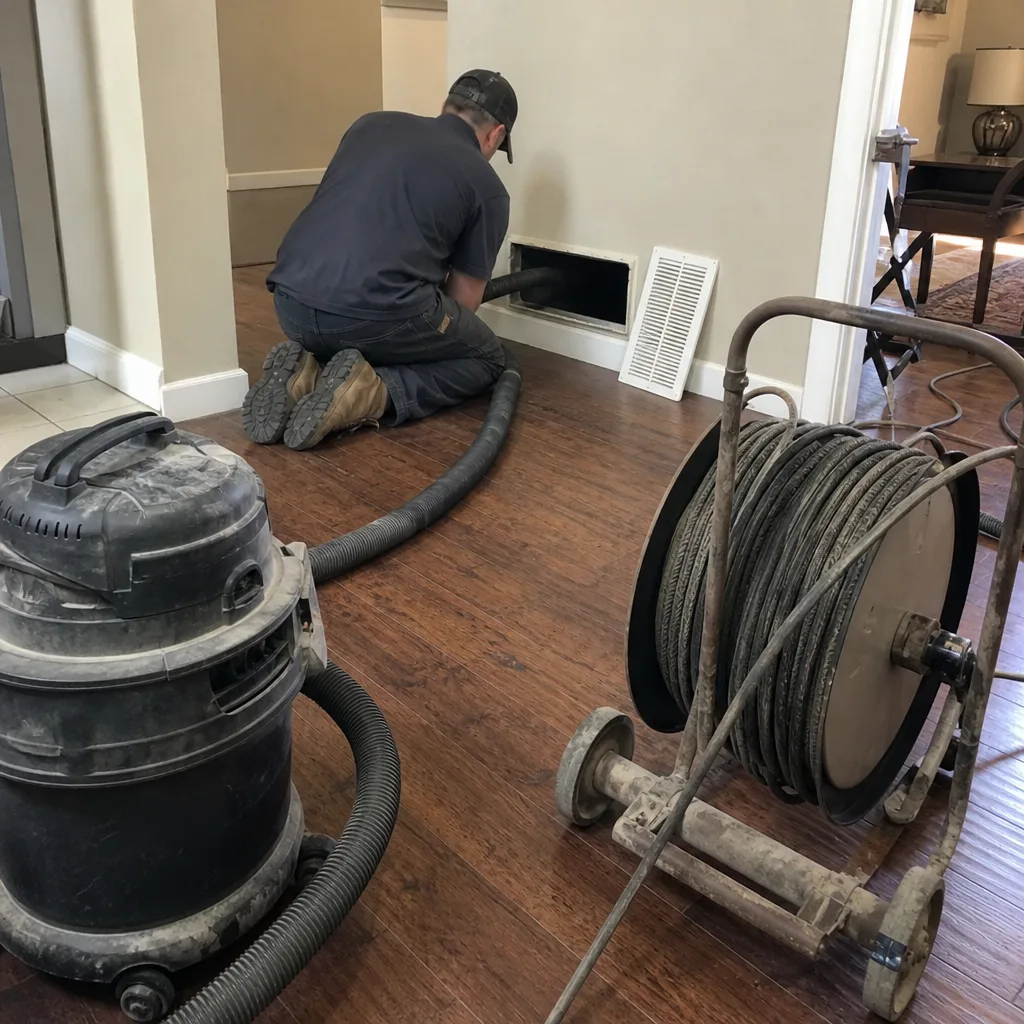
This is where professional-grade equipment matters. We use Air Duct Cleaning Park Hill service teams running Rotobrush and Nikro systems, purpose-built duct-cleaning platforms rather than shop vacuums or consumer attachments, because the debris these seasons leave behind needs real agitation and real negative-air capture to come out rather than get stirred into the room.
Spring (March – May): Cottonwood, Grass Pollen, and Filter Bypass
Spring is the highest-risk filter-bypass period of the year in Park Hill. Cottonwood and grass pollen release in a concentrated window, and on the windy days that follow, that pollen is small enough to pass through a standard filter and drift into the return system. If there’s any gap between filter frame and ductwork, spring is when that gap does the most damage.
What happens to the duct system in spring
Pollen draws into the return side first, then coats the inside of the main trunk and settles in the branches closest to the registers. Fine pollen doesn’t drop out of the airstream easily, so it travels further than heavier dust. By late May a system that was reasonably clean in February can have a visible pollen film across the return plenum and the first branch runs.
What register inspection should look like after peak pollen
After the cottonwood season tapers, pull a few register grilles and look inside with a flashlight. You’re checking for three things, in this order:
- Visible film: A light film of yellow-green or grey dust on the duct walls past the register boot is pollen and outdoor debris that got past the filter.
- Gap at the boot: Run your hand along the seam where the register boot meets the drywall or ductwork. Any felt air movement means unfiltered air is entering there.
- Filter frame fit: Check that the filter is seated flush, with no visible light or air gap around the edges. A filter that doesn’t seal is not filtering.
If two or more registers show film and a boot gap, spring is the season to schedule cleaning and get the gaps sealed with air duct cleaning as part of the visit. Cleaning without sealing just means the pollen comes back next season through the same gaps.
- Replace or upgrade the filter before pollen peaks, not after.
- Check filter fit in mid-March and again in early May.
- Inspect at least three registers on different sides of the house after pollen season.
- Seal boot and plenum gaps before the next heating season begins.
Summer (June – September): Wildfire Smoke and the PM2.5 Protocol
Wildfire smoke is the single biggest seasonal event for a duct system in this part of Colorado. Fine particulate under 2.5 microns (PM2.5) is small enough to ride through most standard filters and settle inside the ductwork and on the evaporator coil. A bad smoke week doesn’t just smell like smoke for a few days. It leaves a fine, sticky film that the next cooling season’s airflow will pick up and circulate.
When to run systems in recirculation mode
During a smoke event, the goal is to stop pulling outdoor air in. Set the thermostat to recirculate indoor air and keep windows and doors closed. If your system has a fresh-air intake or economizer, close or disable it during the smoke. Change to the highest-MERV filter your system can handle without restricting airflow – and if you don’t know that rating for your equipment, that’s a question worth asking a technician before smoke season.
Post-smoke-event inspection checklist
Once the air clears, walk the system and check the following:
- Filter: If the filter is visibly grey or brown after a heavy smoke week, replace it. A loaded filter will pass more fine particulate through the bypass gaps.
- Return grille: Remove one or two and check for a grey film on the grille face and the duct behind it.
- Coil access (if reachable): Look for a visible grey film on the evaporator coil face. Smoke film on a wet coil is a common cause of musty smell in the first cooling week after a smoke event.
- Register airstream: Run the fan with the system off the cooling cycle and check whether the airstream at the registers smells smoky or musty.
When the film is present at registers and on the coil face, cleaning is worth scheduling before the next heating season. We clean smoke-loaded ductwork with Abatement Technologies negative-air containment so the dislodged particulate is captured at the source rather than pushed through the living space. That’s the difference between cleaning smoke out of a system and redistributing it into the room.
Fall (October – November): Furnace Startup and the First-Heat Smell
Every fall, Park Hill homeowners notice a smell the first few times the furnace runs. Most of the time it’s normal. Sometimes it signals a contamination problem that needs attention before the heating season is in full swing.
Normal combustion dust burn-off
The first heat of the season burns off dust that settled on the heat exchanger and in the flue during the summer off-cycle. That’s the familiar hot-dust smell that fades within an hour or two across the first few cycles. It’s not a duct problem, and it’s not a sign the system is dirty inside the ductwork.
What indicates a real problem
A smell that doesn’t fade after several cycles, or one that smells acrid, metallic, or like exhaust rather than dust, is a signal to stop and call a technician. A persistent smell after startup can indicate combustion byproducts entering the airstream, and that’s a combustion and heat-exchanger question – not something to diagnose by running the system and hoping it clears. Any smell of gas, exhaust, or burning that repeats is a call-a-professional situation, and the system should be off until it’s inspected.
Assuming startup is normal, fall is the season to do the duct cleaning that supports the heating season. Cleaning before the first heat means the furnace pushes clean air through clean ductwork from day one, rather than pushing a summer’s worth of pollen and smoke film through the house for the first month. Fall is also when we see the most value in pairing the cleaning with HVAC cleaning so the coil and blower get attention alongside the ducts.
- Run the furnace through two or three short cycles before the first cold week.
- Listen for a persistent smell after startup; if it doesn’t fade, call for inspection.
- Schedule any duct cleaning before the heating season starts, not in the middle of it.
- Check the filter again after the first heat; startup dust loads it faster.
Winter (December – February): Dry Air, Static, and Humidifier Pans
Winter indoor air in Park Hill runs dry. Low humidity raises static electricity, and static makes fine dust cling to duct walls and register grilles instead of settling out where a vacuum can reach it. The practical effect is that winter duct dust is stickier and harder to remove, and it gets re-suspended into the room every time the fan kicks on.
Why humidifier pan inspection belongs with winter duct service
If your home has a whole-house humidifier tied into the ductwork, the water pan is the single most overlooked duct-adjacent component. A pan that sits wet through the heating season can grow a film that gets carried into the airstream. Any winter duct service should include opening the humidifier and inspecting the pan and pad. If the pan is scaled or the pad is crusted, that’s a maintenance item that needs addressing alongside the ducts.
What a winter service should include
- Register and grille inspection for static-clinging dust film.
- Humidifier pan and pad inspection.
- Duct-wall cleaning with agitation to break the static bond, not just a light vacuum pass.
- Sanitizing pass with Guardsman to inhibit microbial growth inside the cleaned ductwork once the walls are clear.
Winter is also a good time to think about filtration upgrades. We supply and install Honeywell and Aprilaire air-quality products, which means a winter cleaning can end with a better filter setup that handles the dry-air dust problem the same season it’s diagnosed. If your system is on an older basic filter, winter is the season to fix that rather than wait for spring pollen to prove the point.
How to Decide if This Year Justifies Moving Up Your Cleaning
The hardest question in seasonal duct care is whether to move up a scheduled cleaning mid-interval. Here’s the decision process we use when a Park Hill homeowner asks.
Start with the base interval
Most homes benefit from cleaning every three to five years under normal conditions. That interval assumes normal conditions, which is exactly what a heavy smoke year, a major renovation, or a new pet throws off.
Add the seasonal load events
Count how many of the following applied to your home this year:
- A wildfire smoke event that lasted more than a few days.
- A renovation that involved drywall, flooring, or cabinetry work inside the home.
- A new pet or a change in pet population.
- Visible dust at multiple registers beyond what a filter change clears.
- A musty or smoky smell in the airstream that didn’t resolve after a filter change.
- Spring pollen season heavy enough to leave visible film behind the registers.
Make the call
- If none of the events applied, stay on your normal interval.
- If one event applied, add a register and filter inspection to your fall routine.
- If two or more applied, move up the cleaning by one season rather than waiting for the calendar.
- If three or more applied or there’s a persistent smell or visible film, schedule an inspection and cleaning before the next heating or cooling season.
This is the point of a condition-driven schedule. The calendar tells you when the interval is up. The seasons tell you when the load is up. In Park Hill, those two things rarely line up, so the inspection is what actually protects the system.
The Four-Season Inspection Checklist
Here’s the full year at a glance, in a form you can keep on the fridge or in a note on your phone.
| Season | What loads the ducts | What to inspect | When to clean |
|---|---|---|---|
| Spring (March – May) | Cottonwood and grass pollen | Filter frame fit, register boots, duct walls past boot | If film plus boot gaps appear after pollen peaks |
| Summer (June – Sept) | Wildfire smoke PM2.5 | Filter, return grille, evaporator coil face, register airstream smell | If film or smell persists after a smoke event |
| Fall (October – Nov) | Furnace startup dust, combustion dust | First-heat smell, filter load, coil and blower | Before the heating season starts, if not done in summer |
| Winter (Dec – Feb) | Dry-air static dust, humidifier pan film | Register dust film, humidifier pan and pad, sanitizing needs | If static dust is visible or humidifier pan shows film |
Run the four inspections every year even when cleaning isn’t due. The inspection is what tells you whether to move the cleaning up. The cleaning itself is what removes what the inspection found.
Common Mistakes to Avoid
- Cleaning on the calendar and never inspecting. A fixed interval ignores whether this year’s smoke or pollen season loaded the system harder than last year’s. Inspect every season, then decide.
- Replacing the filter without checking the fit. A filter that doesn’t seal against the frame passes pollen and smoke around the edges. Fit matters as much as the filter rating.
- Cleaning without sealing. In older Park Hill housing stock, boot and plenum gaps are common. Cleaning a leaky system just means the same debris comes back next season. Sealing is part of the job, not an add-on.
- Ignoring the humidifier pan through winter. A wet pan that grows a film is carrying that film into the airstream. Inspect the pan alongside any winter duct service.
- Running the system on a smoke day with fresh air pulled in. Recirculation is the correct setting during a smoke event. Pulling outdoor air during smoke adds load it will take a cleaning to remove.
- Skipping a professional clean and using a shop vacuum at the registers. A shop vacuum reaches the register boot and nothing further. It stirs up the debris in the process and leaves the trunk and branches untouched.
- Diagnosing a first-heat smell by running the system longer. A smell that doesn’t fade after several cycles is a call-a-technician situation, not a wait-and-see one.
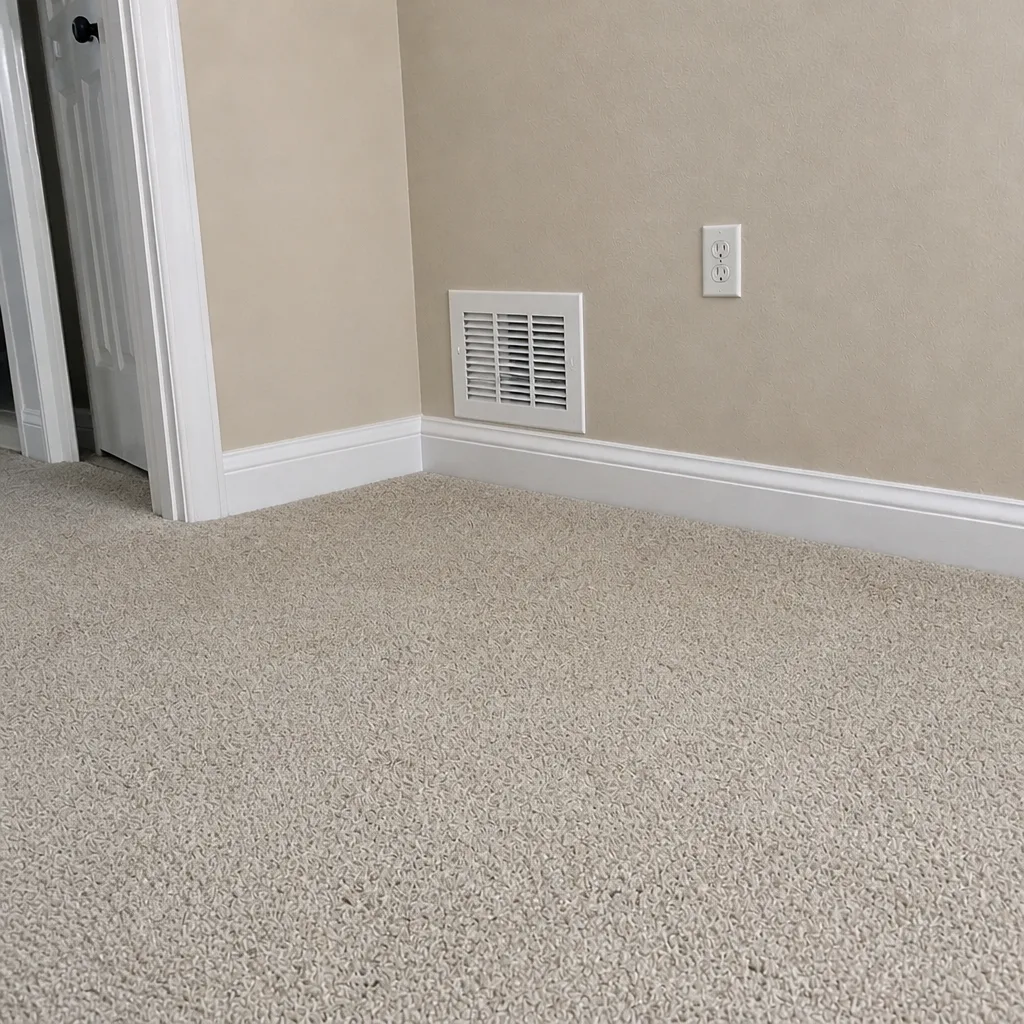
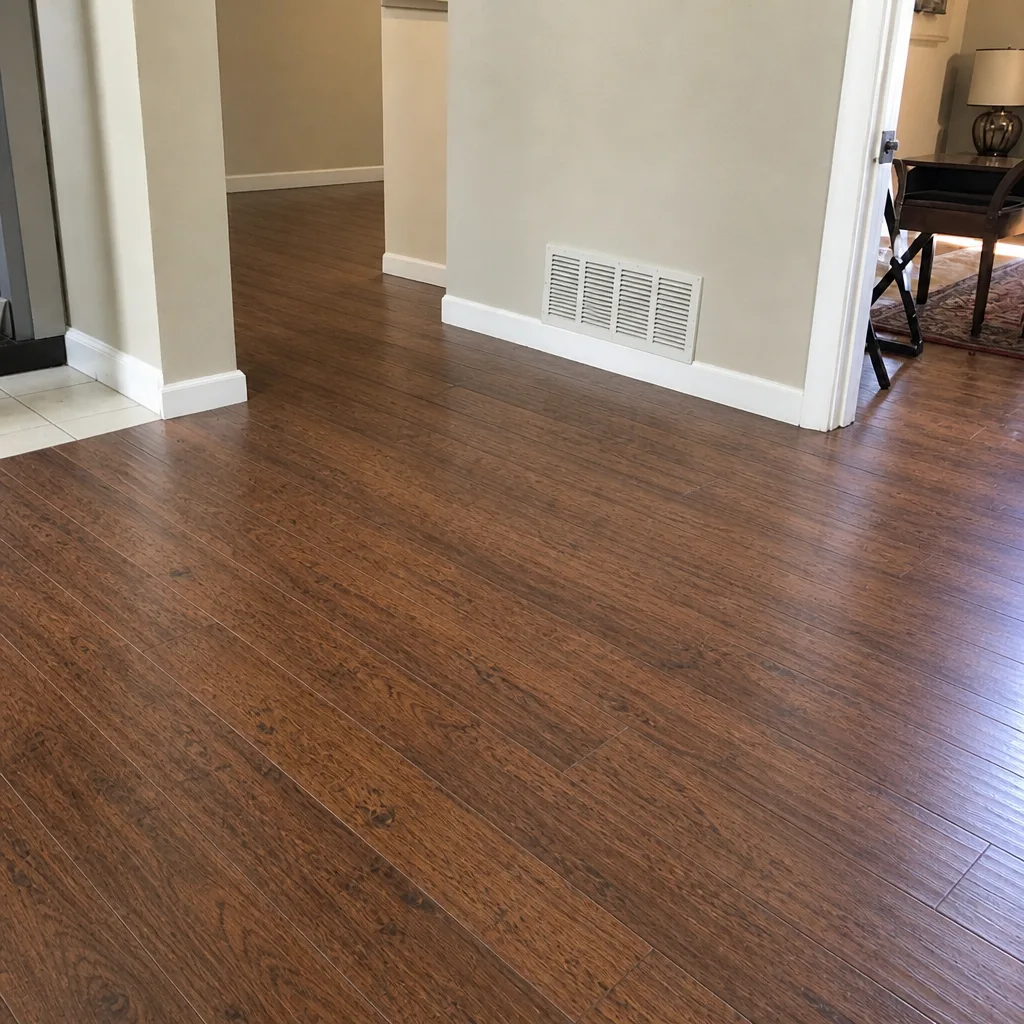
See the difference
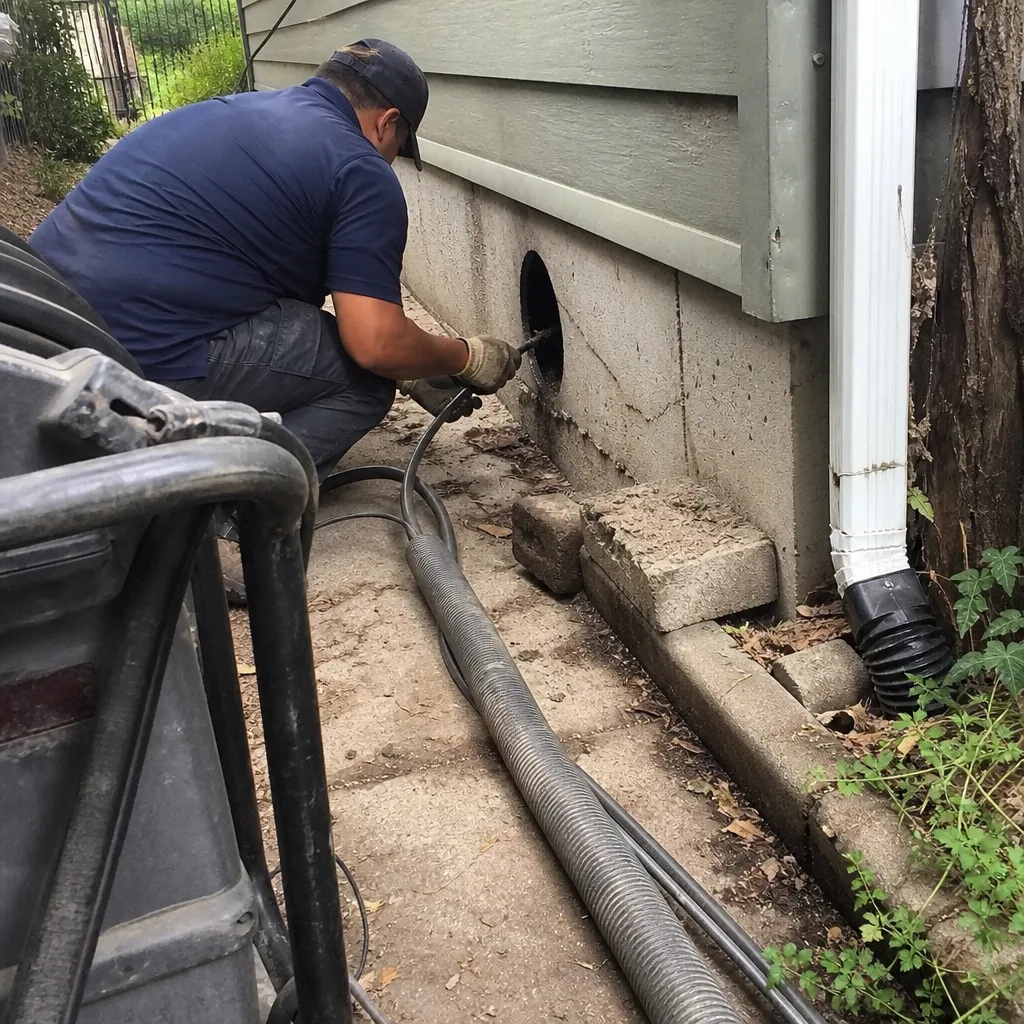 Before
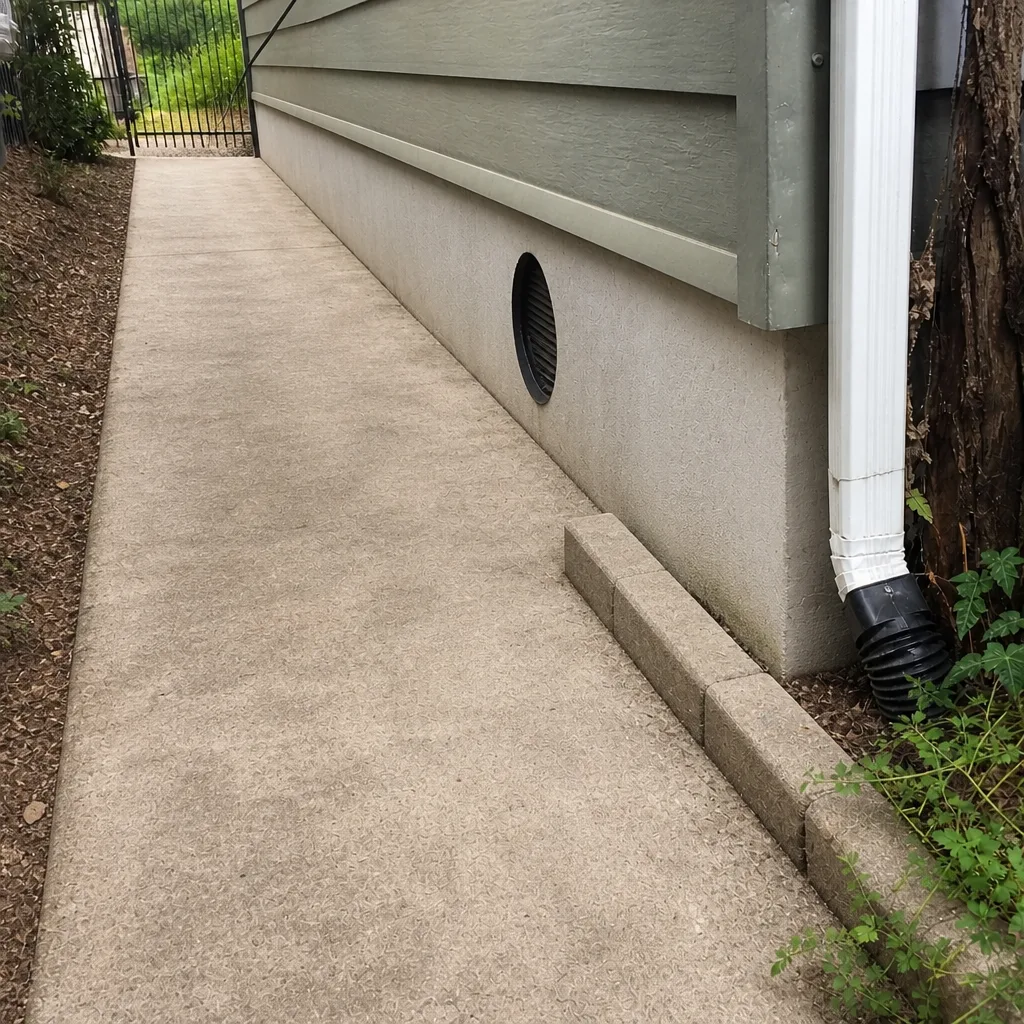 After
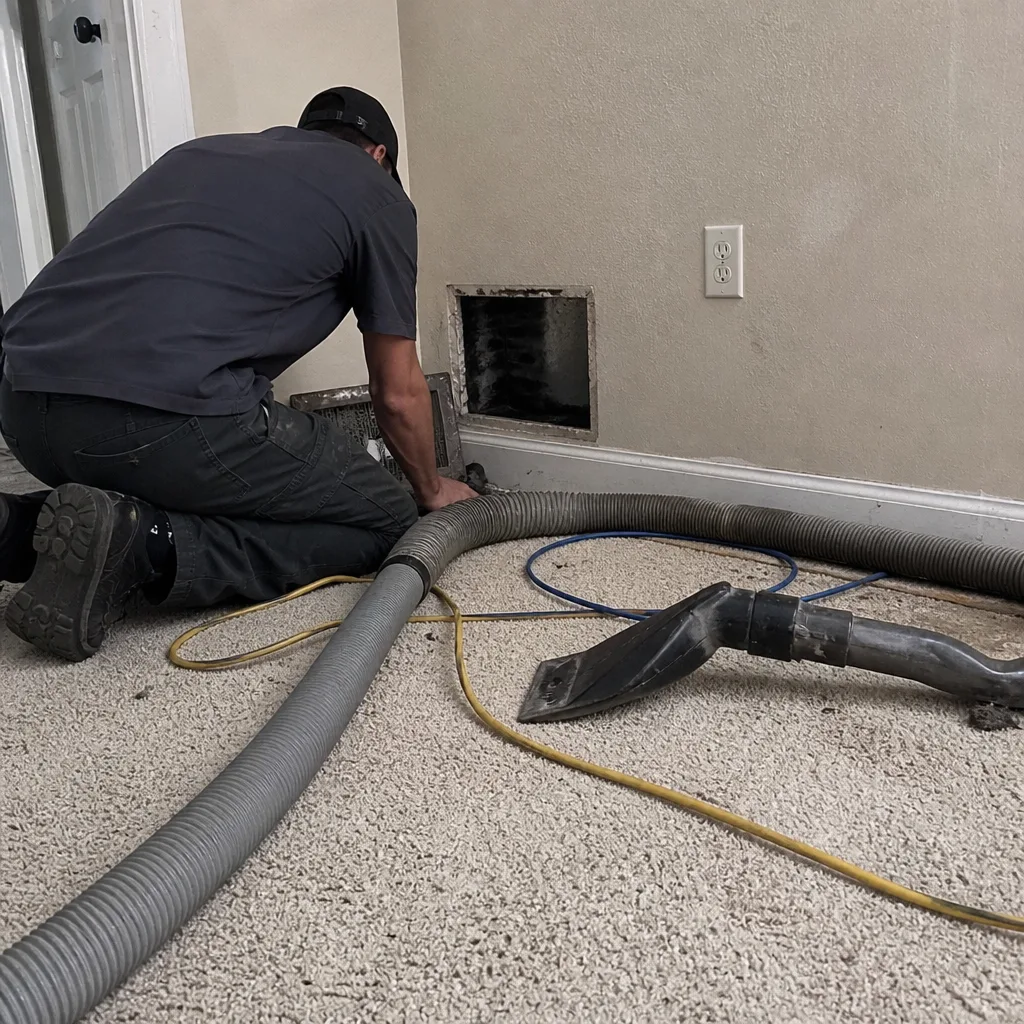 Before
 After
 Before
 After
When to Call a Professional
Seasonal inspection is something a homeowner can do at the register. The cleaning and the sealing are not. Call a professional when you’ve confirmed any of the following: visible film at multiple registers after a pollen or smoke season, felt air movement at a register boot seam, a smoky or musty smell that persists after a filter change, a first-heat smell that doesn’t fade after several cycles, a humidifier pan with visible film or scale, a major renovation that ran through the home, or a change in household occupancy like a new pet, a new baby, or a recent move into an existing home. Any of those is a condition-driven reason to inspect and clean, regardless of the calendar. Air Duct Cleaning Park Hill offers free estimates in Park Hill – call (866) 964-3950.
Frequently Asked Questions
Most Park Hill homes benefit from cleaning every three to five years under normal conditions, but the interval should move up when a heavy seasonal load event occurs. A major wildfire smoke week, a renovation, a new pet, or visible register film are all reasons to move the cleaning up by one season. Inspect registers after each peak season and decide from what you find.
A brief hot-dust smell at furnace startup is normal combustion dust burning off the heat exchanger after the summer off-cycle. It should fade within an hour or two across the first few cycles. A smell that doesn’t fade, or one that smells acrid or like exhaust, is a call-a-technician situation and the system should stay off until it’s inspected.
Yes, but in recirculation mode with windows and doors closed, and with any fresh-air intake or economizer closed off. Running the fan continuously on recirculation keeps indoor air moving through the filter without pulling smoke in. Change to the highest-MERV filter the system can handle, then inspect registers and the evaporator coil face once the smoke clears.
Low winter indoor humidity raises static electricity, which makes fine dust cling to duct walls and register grilles instead of settling out. That static-charged dust gets re-suspended into the room every time the fan runs. A winter cleaning that agitates the duct walls breaks that bond, and a humidifier pan inspection catches the other common winter issue before it gets into the airstream.
A shop vacuum reaches the register boot and no further, and it stirs up debris in the process. Professional cleaning uses equipment like Rotobrush and Nikro to agitate and capture debris throughout the trunk and branches, with Abatement Technologies negative-air containment to keep dislodged debris from spreading into the living space. The scope of the job is the difference.
We handle duct repair and sealing as part of the same service as cleaning, so you don’t need to coordinate a separate contractor for gap sealing. Register boot seams, plenum connections, and joint gaps are the common leak points in Park Hill’s older housing stock and get addressed during the same visit. Cleaning without sealing just lets the debris back in next season.
It adds one item, but it doesn’t change the cleaning interval. The humidifier pan and pad should be inspected every winter alongside any duct service, since a wet pan that grows a film carries that film into the airstream. If the pan is scaled or the pad is crusted, it’s a maintenance item to address alongside the ducts rather than a reason to clean the ducts more often.
The Bottom Line
Park Hill’s four air-quality seasons load ductwork in four different ways: spring pollen, summer smoke, fall furnace startup, and winter static dust. The point of a year-round guide is not to replace the base cleaning interval with a schedule that runs constantly, but to run an inspection every season that tells you whether this year’s load events justify moving the cleaning up. When the answer is yes, the job should include cleaning with professional-grade equipment, sealing the leaks that let the load back in, and a sanitizing pass on anything that needs it. That’s the difference between maintaining the calendar and maintaining the system.
Contact
If this year’s seasons loaded up your system more than usual, get an exact quote before you schedule anything. Estimates are free. Call (866) 964-3950. We answer 24/7. Fast dispatch from 7am to 7pm, Sunday through Friday. We clean with Rotobrush and Nikro systems, capture debris with Abatement Technologies containment, apply Guardsman sanitizing as a final step, and handle duct repair and sealing as part of the same visit so nothing gets referred out. Our technicians have up to 8 years of experience. If a related air-quality issue comes up, dryer vent cleaning is part of the same service lineup and worth a conversation while we’re there.
Written by the team at Air Duct Cleaning Park Hill.