
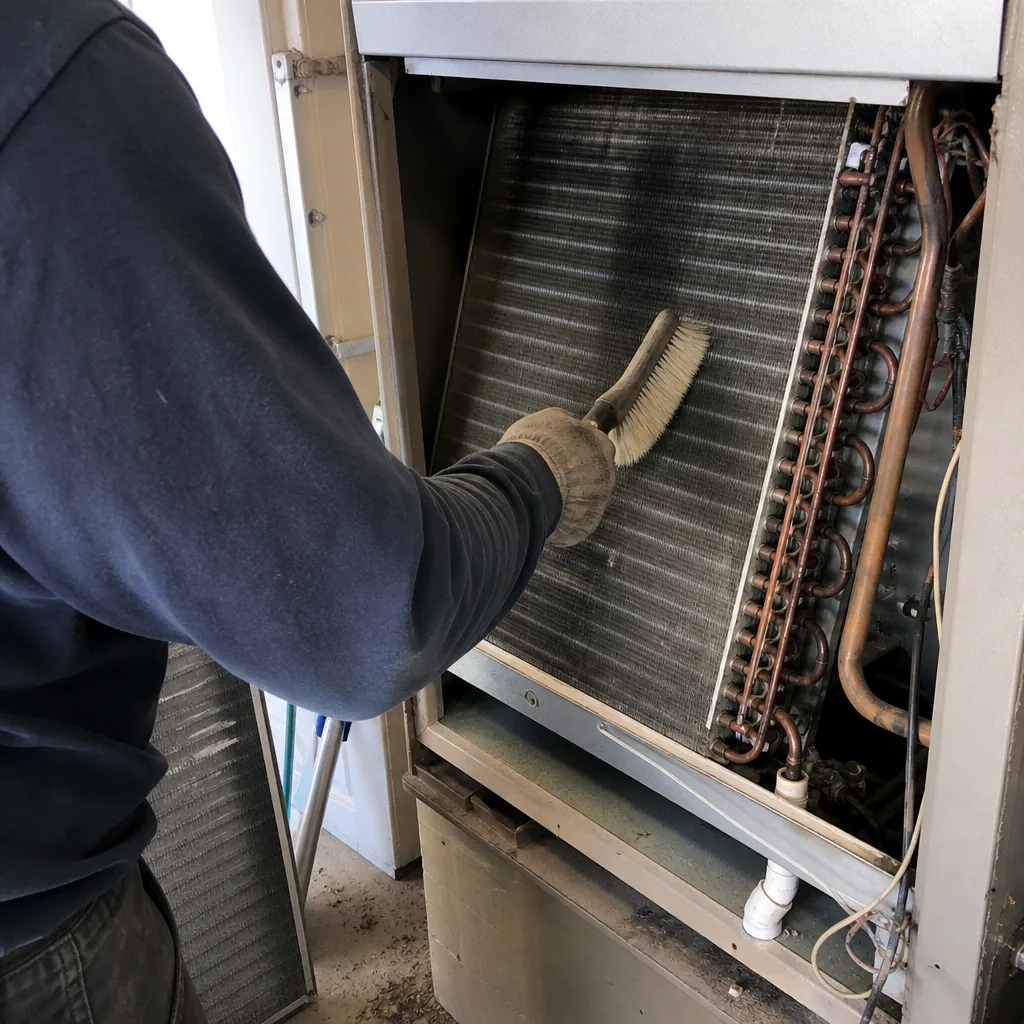
Last updated November 23, 2026
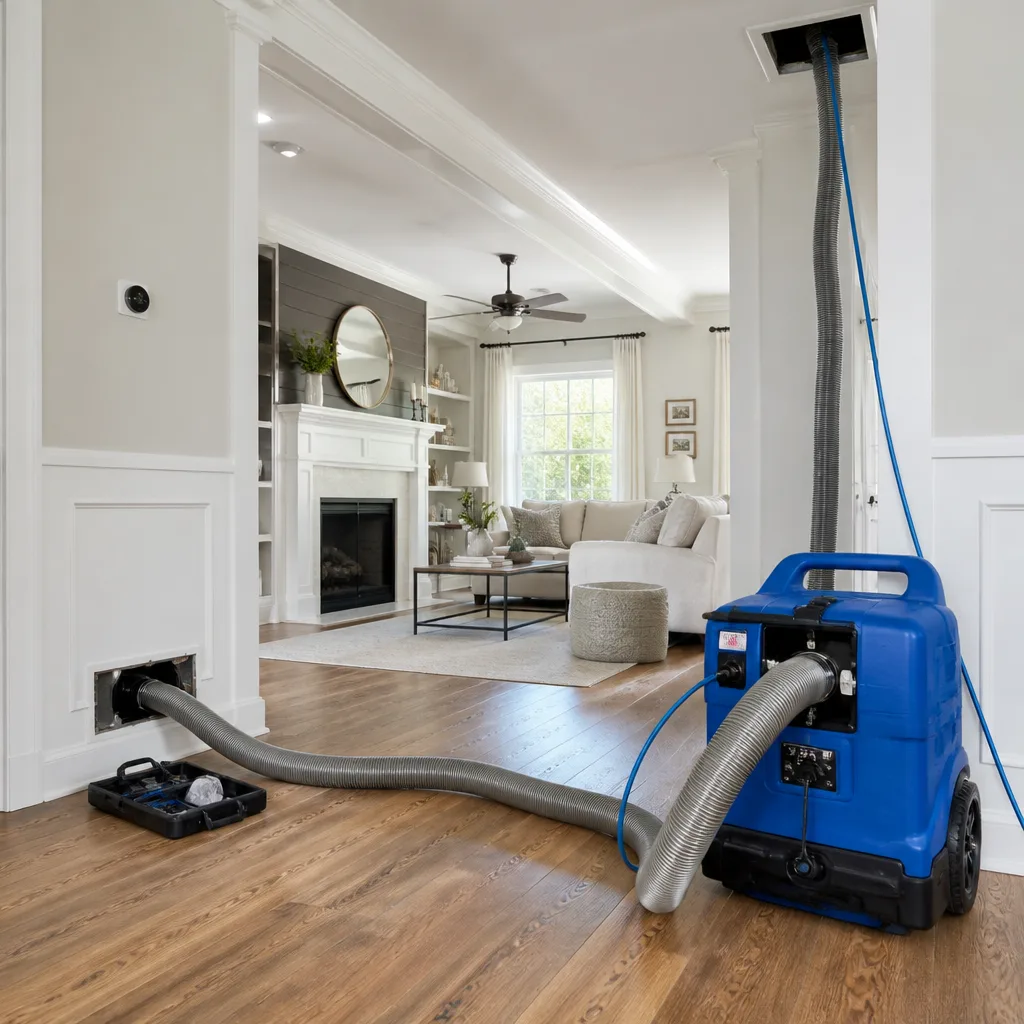 Whole-home duct cleaning
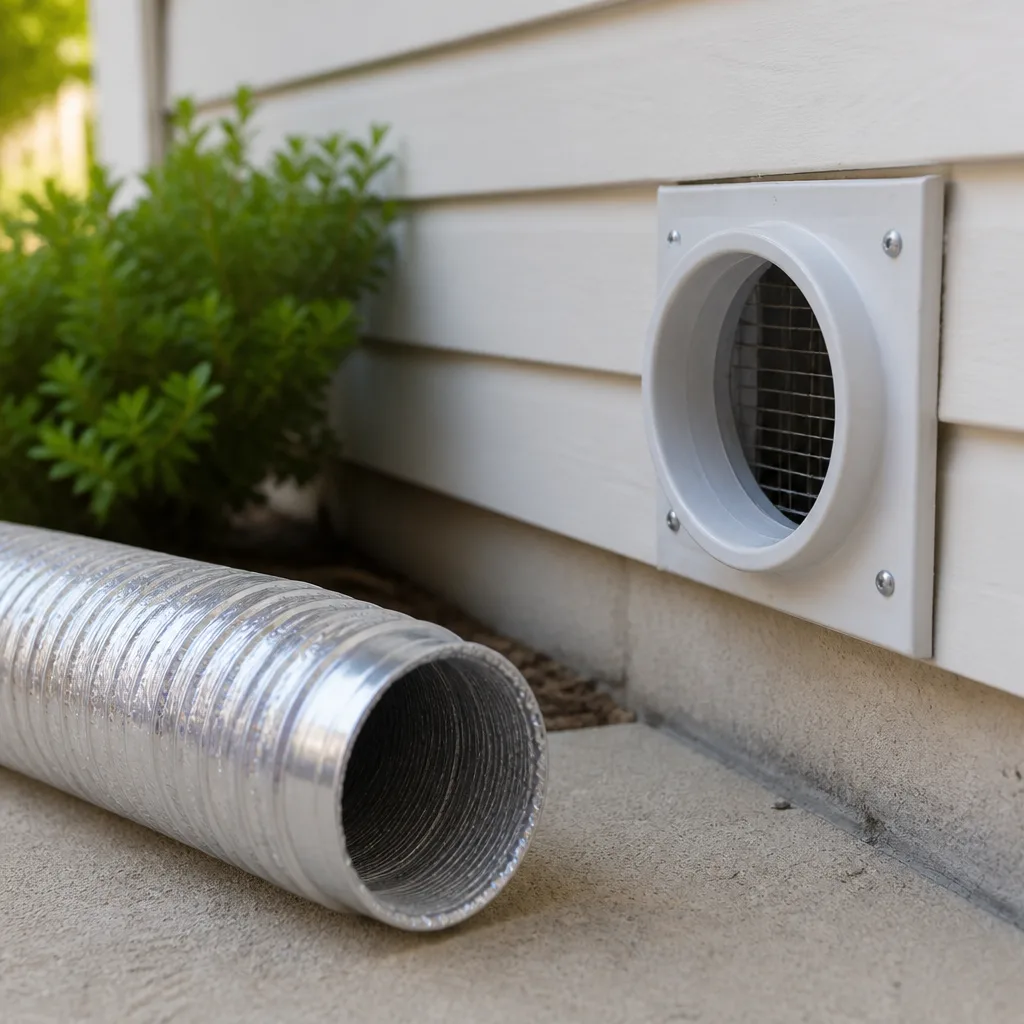 Dryer vent cleaning
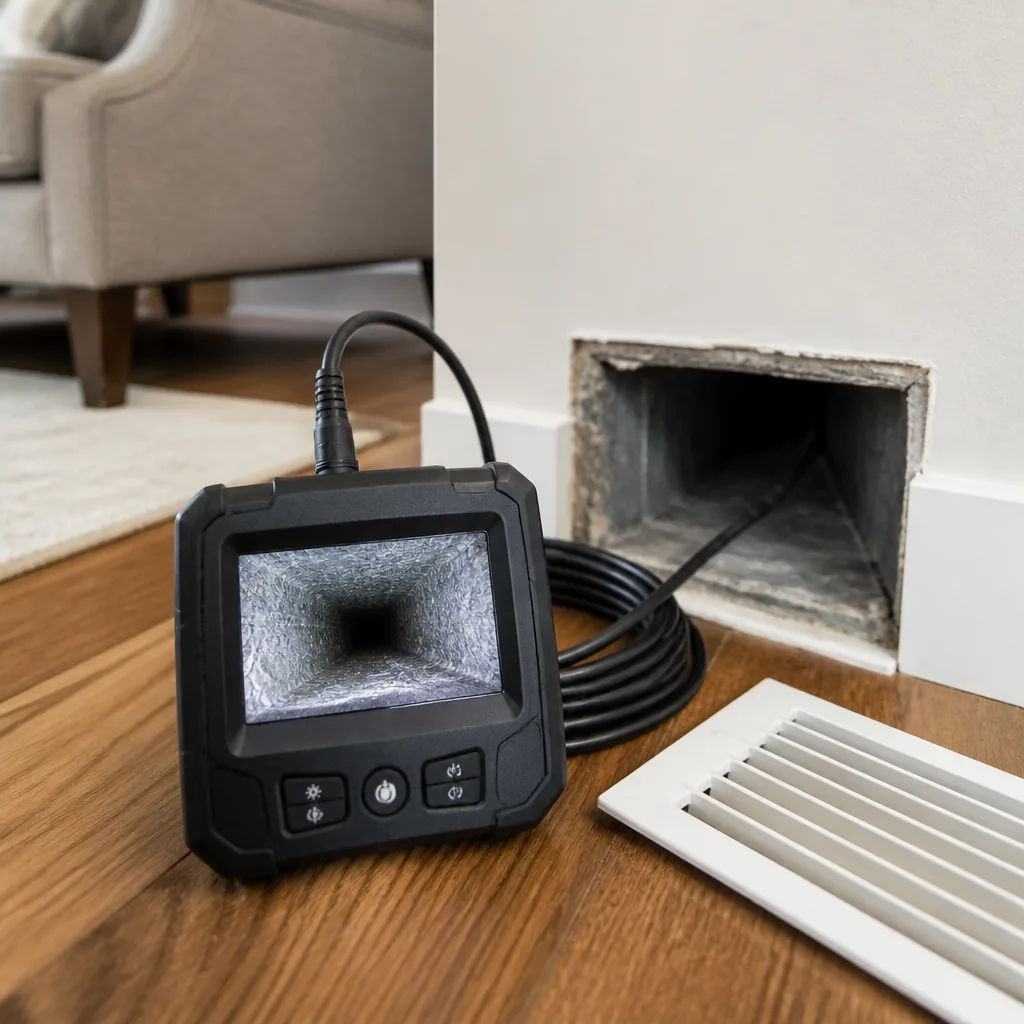 Camera inspection
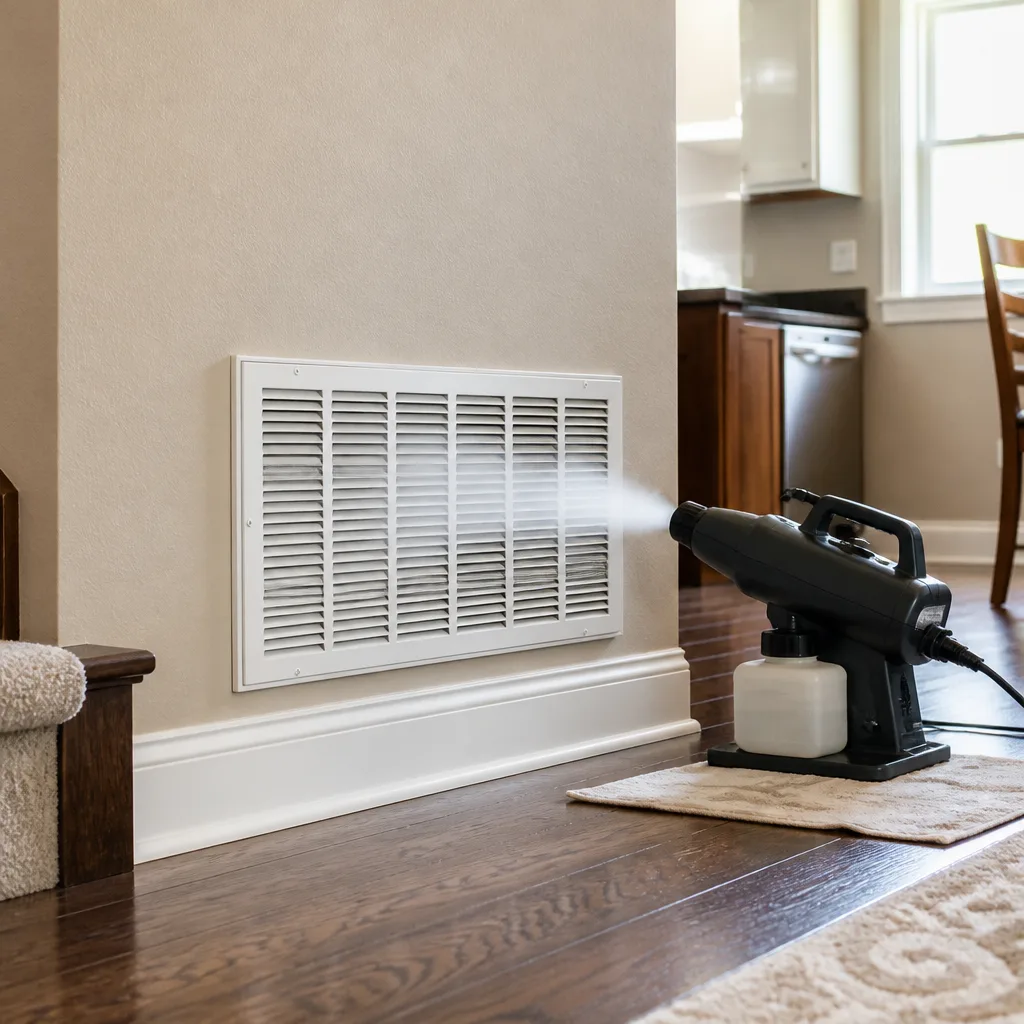 Sanitizing & deodorizing
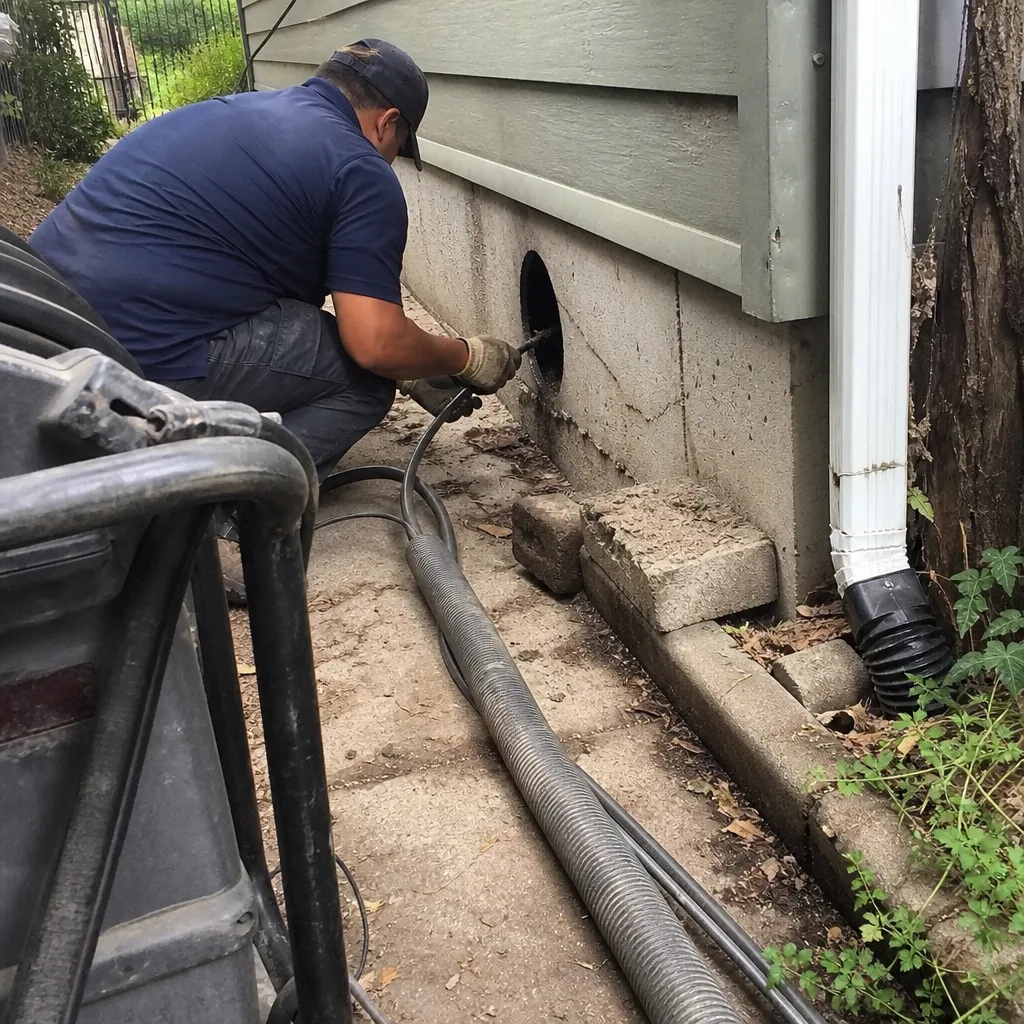
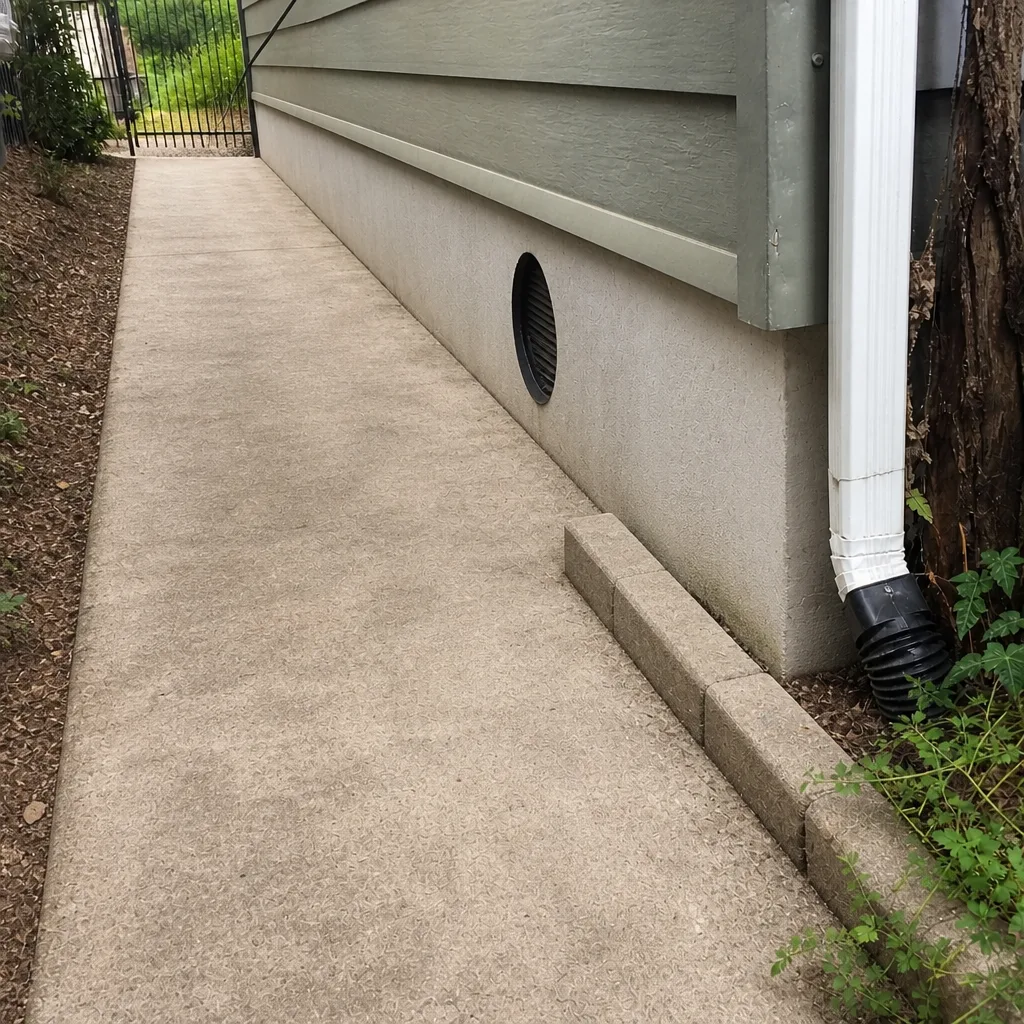
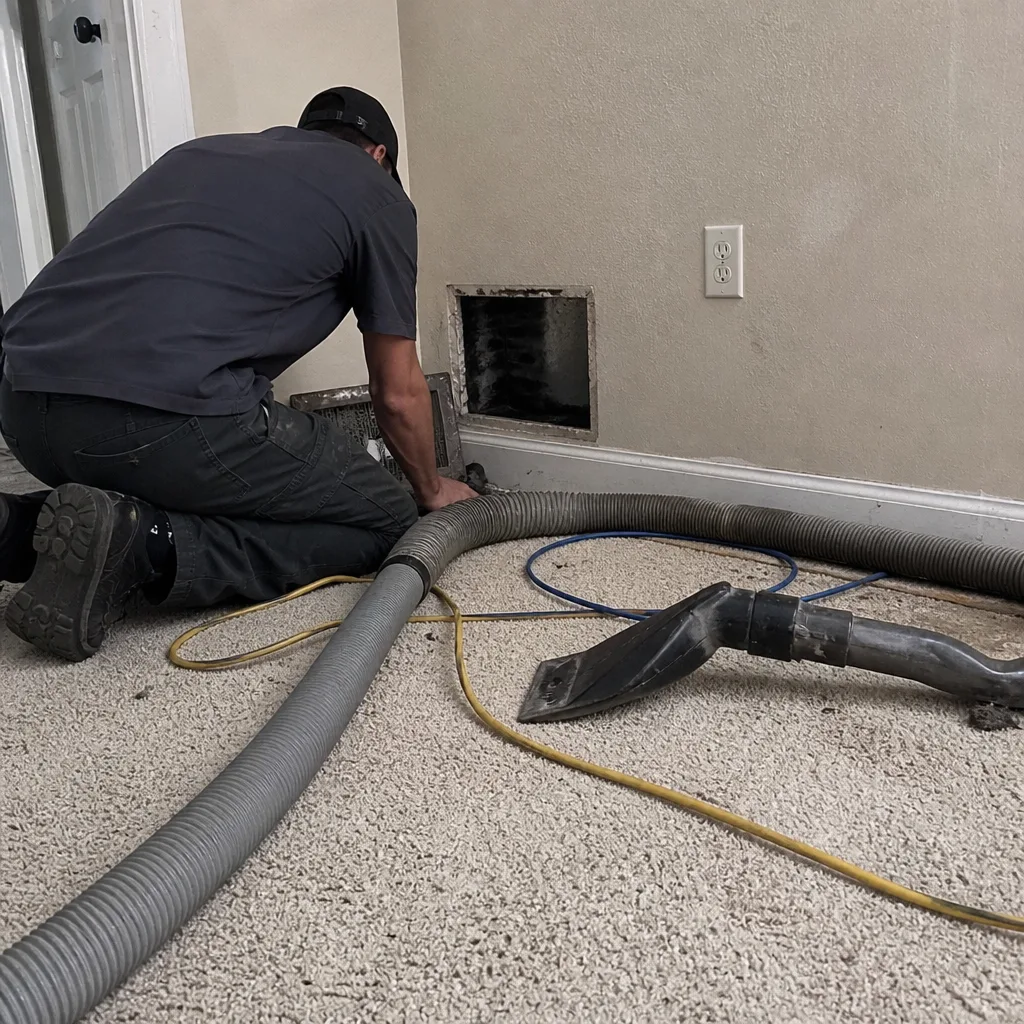
Whole-system duct and dryer vent check with before-and-after photos - you see exactly what came out of your vents
That "$99 whole-house special" is a bait ad - the real number appears once they are in your hallway, or the "clean" is a shop-vac at the register. We photograph the inside of your ducts before and after instead.
Air Duct Cleaning Maintenance Checklist for Park Hill Homeowners
Changing your filter every 90 days is the standard advice, and it’s not wrong. But in Park Hill, a lot of homes have original mid-century ductwork with return-air runs that were never sealed, and in those homes a fresh filter mostly hides the problem. The filter catches what reaches it; it does nothing about the dust that has settled along the inside of unsealed trunks, the gaps at the plenum, or the supply boots that breathe attic and crawlspace air into the system. What follows is a maintenance checklist built around how Park Hill houses actually work: their system ages, their duct layouts, and the Denver air calendar that pushes smoke and pollen through them.
Quick Answer
A practical air duct maintenance checklist for a Park Hill home runs on a seasonal calendar, not a fixed “every X years” rule: inspect registers and change filters monthly during wildfire smoke season (July through September), check for pollen buildup in spring, book professional cleaning based on visible contamination and system age rather than a timer, and log every service in a written record. Homes with 1950s or 1960s ductwork should plan on more frequent attention than newer builds because unsealed returns let debris into the system instead of keeping it out.
Styles & brands we work with
- Whole-home duct cleaning
- Dryer vent cleaning
- Camera inspection
- Sanitizing & deodorizing
Table of Contents
- Why Park Hill Homes Need a Different Checklist
- The Month-by-Month Maintenance Calendar
- The 5-Minute Register Inspection
- Filter Upgrades for Systems That Weren’t Built for Them
- The Humidity Threshold That Changes Everything
- What Professional Cleaning Actually Involves
- Building a Maintenance Record for Resale
- Common Mistakes to Avoid
Why Park Hill Homes Need a Different Checklist
Park Hill is a neighborhood of older housing stock, and that single fact reorganizes this entire checklist. A furnace and duct system installed in the 1950s or 1960s was engineered for a different era of filters and a different understanding of air sealing. The return-air side in many of these homes is a panned joist cavity or a short run of sheet metal with seams that have opened up over decades of seasonal expansion and contraction. That means the system is pulling air from wall cavities, crawlspaces, and rim-joist areas and delivering it to your living room.
Then there’s Denver’s air. Between the spring pollen peak and the July-through-September wildfire smoke season, a Park Hill HVAC system sees a load of airborne particulate that a homeowner in a wetter, calmer climate never deals with. We’ve seen the pattern repeat: a homeowner keeps changing filters faithfully, the filter looks reasonably clean, and yet registers keep throwing dust and the house smells faintly musty whenever the fan kicks on.
The checklist below is calibrated to that reality. It is not a generic “clean your ducts every few years” schedule. It distinguishes between what a homeowner can and should do personally, what a five-minute visual inspection can tell you, and what genuinely requires professional-grade equipment.
- Older unsealed ducts accumulate debris faster and need sealing as well as cleaning.
- Denver smoke season puts a seasonal load on filters that a quarterly change interval doesn’t handle.
- Spring pollen collects at returns and registers in a way you can see if you know where to look.
- Furnace startup in October is when contamination that settled over the summer gets pushed through the house for the first time.
Those four factors, taken together, are why a Park Hill maintenance plan looks different from the advice on a national home-maintenance website.
The Month-by-Month Maintenance Calendar
This is the core of the checklist: a seasonal sequence timed to Denver’s air quality year. Treat the months as windows rather than exact dates, since smoke season varies year to year and pollen peaks shift. What matters is that each task happens at the right point in the cycle, before the load hits the system rather than after.
January through March: Post-Heating-Season Inspection
By late winter the heating system has run for months with the house closed up. Change the filter at least once during this stretch, and again as you head into spring. Open a few registers and look at the grille and the first few inches of duct you can see. If dust is caked on the fins or the duct interior looks furred, that’s a signal the system is holding debris, not just passing it through. This is also a good window to schedule air duct cleaning before the cooling season starts, when the system is quiet and access is easy.
April through June: Pollen Season and Return-Air Focus
Denver’s spring pollen peak hits Park Hill about when the trees go off. Pollen is coarse and it collects at returns and on any exposed filter media. Change the filter more frequently if you can see it discoloring. Check the return-air grilles in hallways and near the floor: if they’re coated, the return side is grabbing pollen before it ever reaches the filter box. If the system is going to be professionally cleaned this year, doing it after pollen season clears avoids immediately refilling clean ducts.
July through September: Wildfire Smoke Season
This is the highest-stress period for a Park Hill HVAC system. Smoke infiltrates and the filter becomes the front line. Check the filter monthly during this window rather than quarterly, because a filter loaded with smoke particulate stops doing its job and starts restricting airflow. Keep windows closed on smoke days and, if you’ve added a media cabinet or a standalone filtration unit, run the fan on a schedule that keeps air moving through it. If you’ve been thinking about HVAC cleaning, doing it before smoke season means the coil and cabinet are clean going into the worst air of the year.
October through December: Furnace Startup and Year-End Logging
The first cold snap in October is when the furnace comes on and years of settled debris get stirred up. Have the system checked before that first startup, not after. Change the filter and, if you can reach it comfortably, vacuum the furnace area around the cabinet. Then update your maintenance record with everything done during the year. This is also the moment to assess whether professional cleaning is due rather than waiting for a visible problem to force the issue.
For a homeowner managing a dryer vent alongside the HVAC system, add a lint check to the spring and fall rotation. dryer vent cleaning belongs on any household maintenance calendar, and it’s easy to let slide when attention is on the furnace and filters.
The 5-Minute Register Inspection
Here’s the most useful thing a Park Hill homeowner can do without touching a single component: a visual inspection of the registers and the first short stretch of duct you can see. No tools beyond a flashlight, no disassembly, no climbing into the attic. The goal is to answer one question honestly: is the system holding contamination that a filter can’t address?
Work through these steps in order. Each takes seconds.
- Look at the supply register grille from underneath. A light dust film is normal. A thick, fuzzy coat of dust on the louvers, or dark streaks below the grille on the wall, means the duct is delivering debris into the room, not just air.
- Shine the flashlight up through the louvers. You’re looking at the interior wall of the duct a few inches in. Clean metal reads as clean metal. Furred, dark, or fuzzy interior walls mean the duct has a debris layer inside.
- Check the return grilles in hallways and near the floor. Returns do more of the collecting than supplies. Lint trapped in the grille, a visible gray film on the filter, or a musty smell when the fan runs all point the same direction.
- Watch for streaks around grille edges. Dark trails around the perimeter of a register often mean unfiltered air is coming in around a loose seal, not through the filter.
- Note a smell test. If the first few seconds of fan operation give off a dusty or musty smell, the system is pushing settled material out. That smell fading within a minute is a sign the contamination is sitting in the ducts, not in the air you’re breathing at that moment.
If two or more of these steps show a problem, professional cleaning is likely overdue rather than optional. If none do and the filter is staying clean, the system is in reasonable shape. This is why we recommend running this check at the start of each season: it turns a vague worry about air quality into a specific yes-or-no answer.
Filter Upgrades for Systems That Weren’t Built for Them
This is where good intentions run into old equipment. A homeowner reads that a higher MERV filter catches more, so they slide a MERV-13 into a furnace that was engineered in a different era for a thin panel filter, and the system starts struggling. High-efficiency filters are denser, and denser means more resistance to airflow. In a system that was never designed for that resistance, the static pressure climbs, the blower works harder, and airflow through the house drops. Rooms at the far end of the duct run stop getting heated or cooled properly, and the whole system runs less efficiently.
That’s a real risk, not a theoretical one, and older Park Hill systems are exactly the profile where it shows up. The right approach is an upgrade path rather than a filter swap. If your system wasn’t built for high-MERV media, the answer is usually a filter cabinet or a media holder designed to handle the higher-efficiency filter without choking airflow. Systems supplied by Honeywell and Aprilaire are made for exactly this: extending the filtration capacity of an existing system without turning the ductwork into a bottleneck.
What that looks like in practice:
- Small step: a MERV rating modest enough to match the airflow the system was designed for. Ask before assuming the highest number is best.
- Structured upgrade: a media cabinet sized to the system, which holds a higher-MERV filter with acceptable pressure drop.
- Whole-home approach: a filtration or air-quality product integrated into the existing ductwork, which is where an Aprilaire or Honeywell installation comes in.
And filter upgrades are only part of the picture. If the return side is unsealed, a higher-MERV filter just gets dirty faster because the system is pulling unfiltered air around the filter, not through it. Sealing and cleaning come first; the better filter does its job after that. air duct cleaning in Park Hill combined with duct repair and sealing is the sequence that makes a filter upgrade pay off.
The Humidity Threshold That Changes Everything
There’s a specific line where a maintenance checklist stops being routine: 50% relative humidity inside the home. Above that threshold, the risk shifts from dust and particulate to moisture and mold, and the checklist becomes a mold-risk inspection rather than a cleaning schedule. Relative humidity sustained above 50% creates the conditions where mold can establish on organic material, and dust inside ductwork is exactly the kind of material that will support it.
Why does this matter in Park Hill specifically? Denver is generally a dry climate, but a house can easily run above 50% RH for reasons that have nothing to do with outdoor weather: a humidifier set too high, a bathroom fan that isn’t venting properly, or a damp crawlspace feeding moisture into the return system. If the house has a musty smell in summer, or if registers show moisture in the cooling season, check the humidity before assuming the ducts just need cleaning.
What to do when the reading is above 50%:
- Track it for a week with an inexpensive indoor hygrometer rather than trusting a single reading.
- Find the source before cleaning: plumbing leak, crawlspace moisture, an over-active humidifier, or venting that sends air in the wrong direction.
- Escalate to inspection rather than a routine cleaning, since cleaning a system that has a mold problem doesn’t fix the moisture that caused it.
- Consider humidity control as part of the longer-term fix. Products like Aprilaire’s humidity solutions exist for exactly this reason, and they’re worth discussing with a specialist.
Cleaning ducts in a house running above 50% relative humidity without addressing the moisture is throwing effort at a downstream symptom. Fix the source, then clean, then treat with a sanitizing step like Guardsman to inhibit microbial growth inside the cleaned ductwork.
What Professional Cleaning Actually Involves
The gap between a homeowner’s maintenance routine and a professional cleaning is largely about equipment, and specifically about containment. A shop vacuum attached to a register will pull some dust out of the duct, but it’s also moving the air inside the house, which means it can redistribute what it dislodges. That’s the problem professional equipment is designed around. When you know what a proper job looks like, it’s easier to evaluate what any company is actually offering.
Here’s the sequence we use, and the sequence to expect from any specialist worth hiring:
- Inspect before cleaning. Registers, returns, plenum, and any accessible duct runs are checked first, so the cleaning is scoped to what’s actually there.
- Set up negative-air containment. Abatement Technologies negative-air equipment pulls dislodged debris into a contained system instead of letting it escape into living space. Contain, clean, contain again.
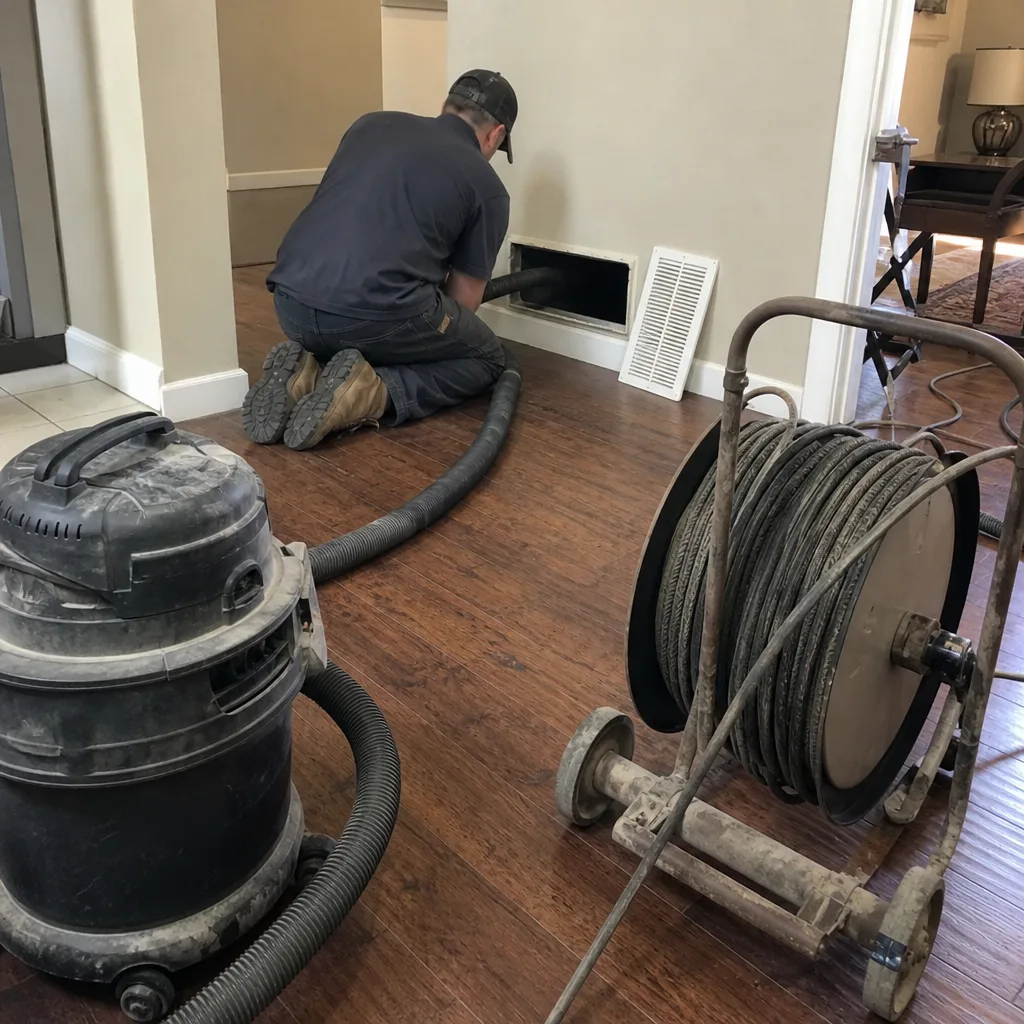
- Clean with professional duct-brush equipment. Rotobrush and Nikro systems are the platforms commercial contractors use, and they agitate the duct interior while capturing the debris. This is the difference between cleaning and surface wiping.
- Seal the leaks. Repairing and sealing the return side is one of the most overlooked steps in the trade. Cleaning without sealing just means the system reloads. Duct repair and sealing is a first-party part of the work rather than a referral to someone else.
- Sanitize as a final step. Guardsman sanitizing treatment is applied after cleaning to inhibit microbial growth inside the ductwork. It’s not a substitute for cleaning and it doesn’t fix a moisture problem, but as a final pass it’s a sensible extension of the job.
- Verify and document. Before-and-after documentation of the ducts you had cleaned belongs in the job file. Ask for it, and keep it for your records.
Because we handle HVAC cleaning, duct repair and sealing, and air-quality products together, a single visit can address the coil, the ducts, and the sealing in one pass rather than three separate appointments. That matters most in older Park Hill homes, where one problem usually has a partner hiding nearby.
Building a Maintenance Record for Resale
Everything in this guide produces a data point, and a data point is worth more when it’s written down. A clean maintenance record is one of the quiet advantages at resale: a buyer looking at an older Park Hill home will have questions about the HVAC system, and a documented record answers them without guesswork. An undocumented system is a question mark; a documented one is a known quantity.
Keep a simple log, physical or digital, and update it after every service visit and every filter change. Log these fields:
- Date of the service or filter change.
- What was done: filter change, visual inspection, professional cleaning, repair, sealing, sanitizing.
- Who did it: the company or technician, described simply.
- What equipment was used, if the provider did the work. Professional-grade platforms like Rotobrush and Nikro belong in the record; so does any air-quality product installed.
- Before-and-after photos, if professional cleaning was performed.
- The recommendation for next time: what the technician suggested, and why.
- Any humidity or filter-MERV notes, since filter grade and indoor humidity tell a future buyer a lot about how the system has been kept.
That last field is the one most homeowners skip, and it’s the one a real-estate inspector notices. A record showing consistent filter changes at a MERV grade matched to the system, plus a documented humidity reading, says the system was understood rather than just used. It’s also useful for you, because it makes the “is cleaning due?” decision a matter of looking at the pattern rather than guessing.
Common Mistakes to Avoid
- Changing the filter and calling it maintenance. The filter handles what reaches it. In an unsealed return system, the debris that settles inside the ducts never reaches the filter at all, so a clean filter can sit above a very dirty duct.
- Sliding a MERV-13 into an old system to “upgrade.” The denser media can restrict airflow in a furnace that wasn’t engineered for it, dropping comfort and efficiency. Match the filter to the system or upgrade the filter housing, don’t force the media.
- Cleaning before sealing. Cleaning a system with unsealed returns means new debris flows back in immediately. Seal first or at the same time, or you’re paying twice.
- Ignoring indoor humidity in a dry-climate mindset. Denver reads as dry, but a humidifier, a damp crawlspace, or bad bathroom venting can push a Park Hill home above 50% RH. Check it rather than assume.
- Skipping the dryer vent because it isn’t the HVAC system. A clogged dryer vent is a real fire risk and it’s often left off a duct-focused maintenance plan. It deserves a place on the seasonal rotation.
- Trusting a company that shows up with a shop vacuum. If the provider isn’t using purpose-built equipment and containment, ask what they’re using. The equipment is a reasonable question.
- Keeping no record. Undocumented work is nearly invisible at resale and makes it impossible to know whether cleaning is actually due or you’ve just been told it is.
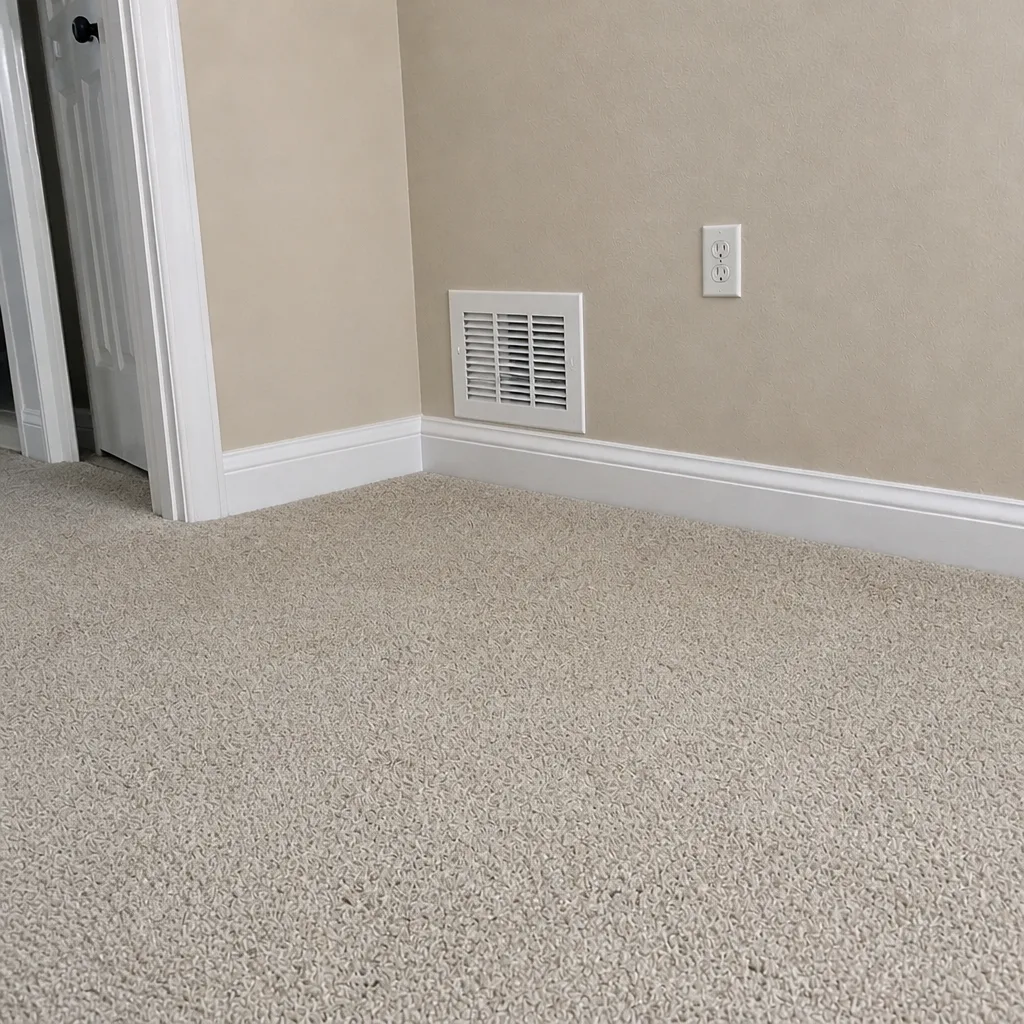
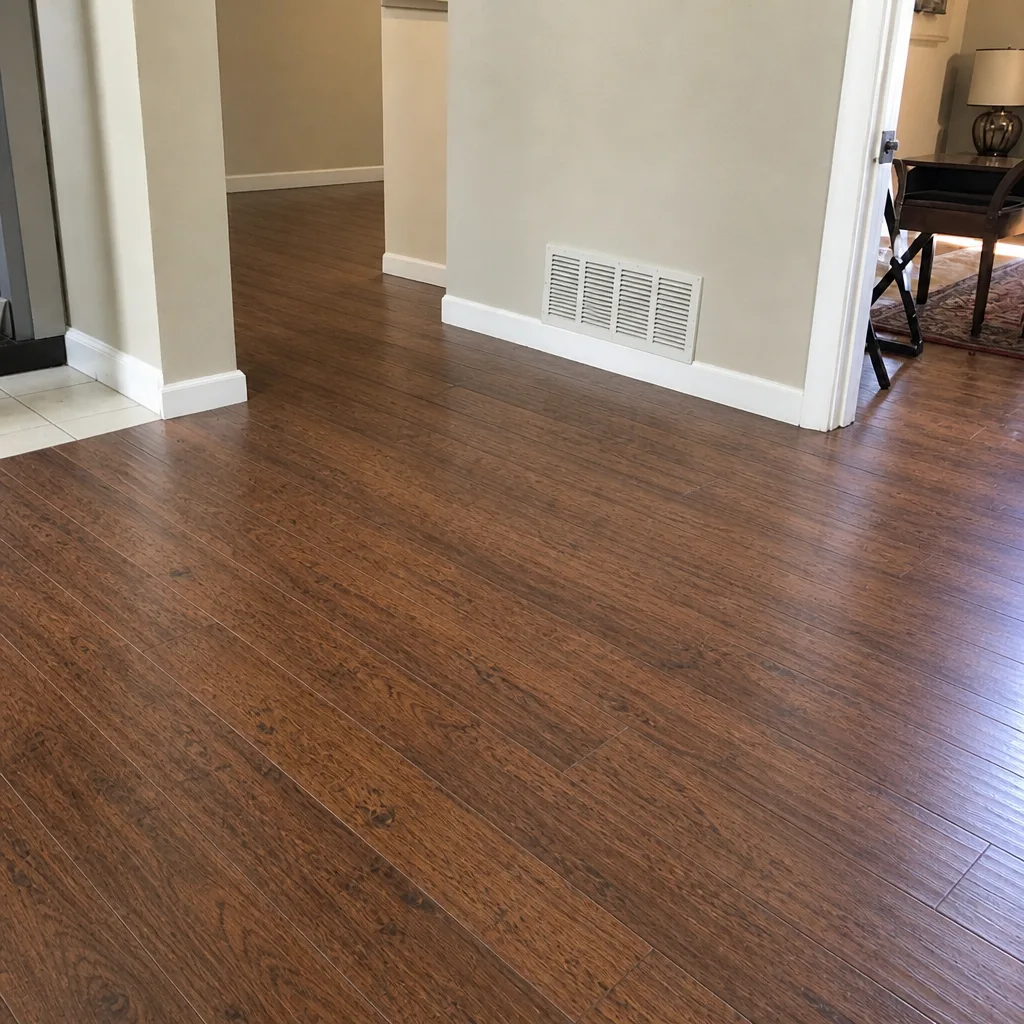
See the difference
 Before
 After
 Before
 After
 Before
 After
When to Call a Professional
You should call a professional when the visual inspection turns up two or more problems, when the filter discolors much faster than usual, or when the house smells dusty or musty on fan startup. You should also call when the humidity is sustained above 50% and you can’t trace the source, or when you’ve been told the system needs cleaning but want a straight answer about whether it actually does. Older Park Hill systems with unsealed returns should get a professional evaluation even if they look acceptable, because the problems that matter most aren’t always visible from a register. Air Duct Cleaning Park Hill offers free estimates in Park Hill. Call (866) 964-3950. We answer 24/7. Fast dispatch from 7am to 7pm, Sunday through Friday.
Frequently Asked Questions
There’s no universal interval, and the honest answer depends on the system and the home. In a newer Park Hill house with sealed ductwork, cleaning on a long interval tied to visible contamination is reasonable. In a mid-century home with unsealed returns and a heavy smoke season, contamination builds faster and the check should be more frequent. Use the register inspection to make the call rather than a fixed number of years. If you’re unsure, call (866) 964-3950 for a free estimate.
No, and that’s worth saying plainly. A higher-efficiency filter catches what passes through it, and in an unsealed return system a lot of air bypasses the filter entirely. The filter can’t clean the duct, and forcing a MERV-13 into an old system can drop airflow. Clean and seal first, then upgrade the filtration properly. Call (866) 964-3950 and we’ll scope it correctly.
A proper job starts with inspection, uses negative-air containment and professional brush equipment, seals the leaks, sanitizes as a final step, and is documented with before-and-after photos. The documentation is how you know it was done, and it’s a fair thing to ask for. We hand over photos of your ducts for your records. Call (866) 964-3950 for an estimate.
Usually because the scope is different: a shop vacuum and a surface pass is not the same job as containment plus professional brush equipment plus sealing. The gap in price reflects a gap in what’s being done, not a bargain. We quote per system after inspection, so the number you agree to reflects the actual scope. Call (866) 964-3950 for a free estimate.
Not necessarily, and treating it as one usually fails. Above 50% relative humidity the concern is moisture and mold risk, not dust, so the first step is finding the source. Once the moisture issue is addressed, cleaning and a Guardsman sanitizing step make sense. Call (866) 964-3950 to talk through the situation.
Log the date, what was done, who did it, what equipment was used, any air-quality products installed, before-and-after photos, and the technician’s recommendation for next time. Add filter grade and any humidity reading you have. That record is useful for you and valuable at resale, since it turns an older Park Hill system into a documented one. Call (866) 964-3950 if you want help getting it organized.
The Bottom Line
A maintenance checklist is a calendar and a set of eyes, not a timer. For a Park Hill home, the calendar is Denver’s: smoke season, pollen season, furnace startup. The eyes are the five-minute register inspection that tells you whether the system is holding debris the filter can’t reach. From there the sequence is clean, seal, and sanitize, using equipment built for the job rather than a shop vacuum and a hope. Keep the record. Match the filter to the system. Check the humidity. Those four habits will do more for what’s circulating through your house than any single visit, and when cleaning really is due, you’ll know it rather than guess.
Air Duct Cleaning Park Hill handles the full indoor-air picture: cleaning, dryer vent work, HVAC cleaning, duct repair and sealing, and air-quality and sanitizing products from brands like Honeywell and Aprilaire, all handled with Rotobrush, Nikro, and Abatement Technologies equipment. If you’d rather not sort through it alone, call (866) 964-3950 for a free estimate. We answer 24/7. Fast dispatch from 7am to 7pm, Sunday through Friday. Our technicians have up to 8 years of experience.
Written by the team at Air Duct Cleaning Park Hill.